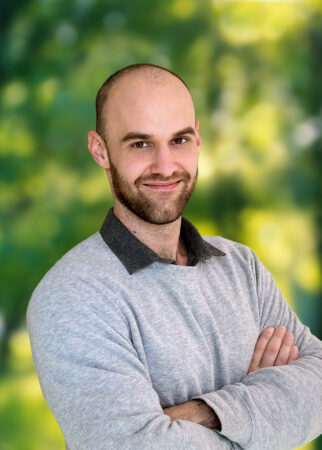
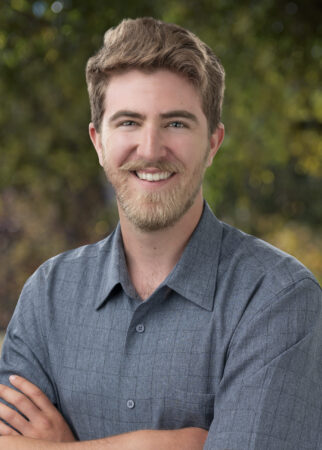
Andrew Veary, B.S.

Image Analyst II

B.S. Natural Resource Conservation


West Sacramento, California

Andrew has experience performing freshwater fisheries assessments using common capture techniques, age/growth sampling, diet composition, water quality sampling, and laboratory analysis. He was a fisheries observer in the North Atlantic on both scallop and groundfish commercial fishing vessels, as well as an observer for marine mammals. His training allowed him to observe on vessels that fished using several gear types, including dredge, mid-water/bottom trawl, gillnet, rod and reel, and longline. He spent over 300 days at sea collecting extensive biological data pertaining to targeted catch, bycatch, environmental factors, as well as fishing effort and behavior. He is currently working to develop robust code to help automatically detect, enumerate, and classify organisms from images in order to automate processes and efficiently produce quantitative metrics from fisheries surveys.
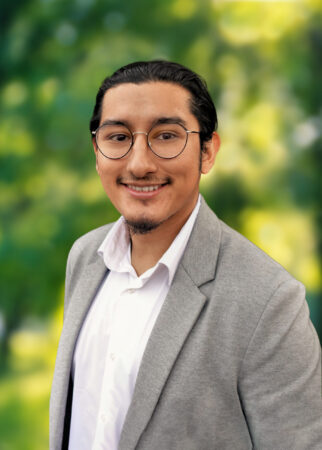
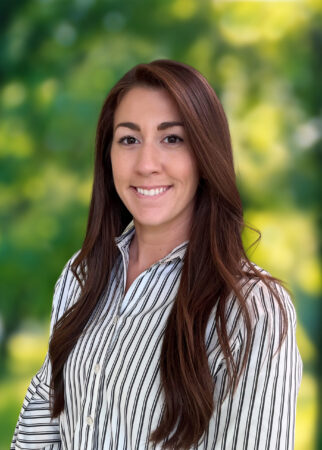
Andy Lara, B.S.

Research Associate

B.S. Ecology and Evolutionary Biology


Portland, Oregon

Andy is an Aquatic Ecologist with a variety of experience in population and community ecology, and freshwater conservation, ranging from the bayous of East Texas to the glacial rivers of Washington State’s North Cascades. Andy is skilled in multiple field sampling techniques, including backpack electrofishing, seine netting, hoop net trapping, eDNA collection, and various tagging techniques such as PIT tagging, Visible Implant Elastomer (VIE), and VHF transmitters for radio telemetry. He also has experience in technical laboratory methods, including stable isotope analysis, taxonomic identification and morphological measurements of aquatic species, and stomach content analysis. His previous research includes the study of taxonomic and functional diversity of freshwater fishes in East Texas, the investigation of connectivity and spatial distribution among different habitat types, the repatriation and tracking, via radio telemetry, of poached alligator snapping turtles into East Texas watersheds, as well as occupancy trapping for existing turtle populations. Recently, Andy participated in backcountry electrofishing and habitat survey expeditions to examine the existing salmonid populations in Northern Washington, and on a mark-and-recapture study utilizing electrofishing and PIT tagging of remote populations of O. mykiss in Southern California’s Piru Creek. Andy is also skilled in data analysis of community structures and dynamics, and population genetics. Through other work, He is also well-versed in public relations, civic engagement, and outreach focused on diversity, inclusion, and equity.

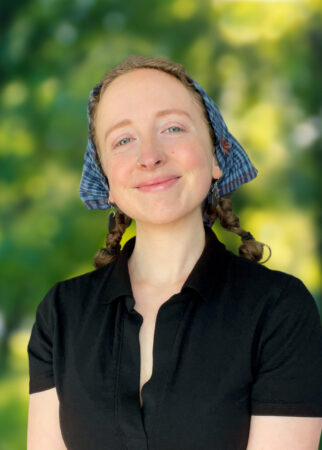
Lauren Ellenbecker, B.A.

Technical Writer I/Proposal Coordinator

B.A. in Journalism and Media Production


Portland, Oregon


Lauren Ellenbecker is a journalist who shares stories about the Pacific Northwest’s environmental intricacies, how degradation manifests within its landscapes, who is impacted and what is being done about it. Lauren’s reporting has brought her to scorched old growth forests, rivers altered by antiquated logging operations and the dining table of a homeowner who fears their life will be swept away in a flood. These experiences contain multitudes of personal, scientific and thought-provoking tales, all of which converge with the perseverance, recovery and transformation of both humans and the environment. Now, Lauren continues to expand her knowledge but from a different angle: working alongside those moving the needle in ecosystem research and recovery. She supports the Cramer Fish Sciences team by preparing, executing and delivering proposals so they can find steadfast solutions for fish populations across the Pacific Northwest. Lauren continues to write often, whether it’s compiling a proposal, freelancing or weaving together a poem about the wonders of nature.

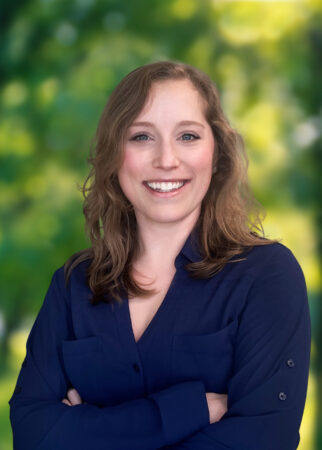
Maeghen Wedgeworth, M.S.

Fisheries Biologist II

B.S. Biology; M.S. Natural Resource and Ecology Management


West Sacramento, California

Maeghen is a fisheries biologist with experience in both freshwater and estuarine fish research including abundance estimation, occupancy relationships, mark-and-recapture, and life history studies. She recently served as an inshore fisheries biologist for the South Carolina Department of Natural Resources – Marine Resources Research Institute where she conducted long-term population monitoring of freshwater and estuarine finfish, sharks, turtles, and marine mammals. She has diverse field survey experience including snorkel, eDNA, radio-telemetry tracking, electrofishing, seine net, trammel net, gill net, longline, drumline, and trawl gears. She is an experienced boat operator in rivers, deltas, bays, and nearshore waters. Additionally, she is experienced in laboratory techniques including otolith, fin-ray, microplastics, and histological sample processing and staging. Maeghen also has experience managing and analyzing fisheries abundance, occupancy, life history, and hierarchical data using RStudio, SAS, and JAGS programs. During her graduate career, she developed protocols and led research on Prairie Chub abundance and life history relationships in the Red River basin of Texas and Oklahoma.

Selected Publications

Steffensmeier, Z. D., S. K. Brewer, M. M. Wedgeworth, T. A. Starks, A. W. Rodger, E. Nguyen, and J. S. Perkin. In press. Conservation at the Nexus of Niches: Multidimensional Niche Modelling to Improve Management of Prairie Chub (Machrybopsis australis). North American Journal of Fisheries Management.


Steffensmeier, Z. D., M. M. Wedgeworth, L. Yancy, N. Santee, S. K. Brewer, and J. S. Perkin. 2022. Paradigm versus paradox on the prairie: testing competing stream fish movement frameworks using an imperiled Great Plains minnow. Movement ecology 10(1):1-18.


Wedgeworth, M. M., R. Mollenhauer, and S. K. Brewer. In press. Variation in Prairie Chub hatch relationships across wet and dry years in the upper Red River basin. North American Journal of Fisheries Management.


Steffensmeier, Z.D., M.M. Wedgeworth, L. Yancy, N. Santee, S. K. Brewer, and J. S. Perkin. 2022. Paradigm versus paradox on the prairie: testing competing stream fish movement frameworks using an imperiled Great Plains minnow. Movement ecology 10:1-18.


Mollenhauer, R., S. K. Brewer, J. S. Perkin, D. Swedberg, M. M. Wedgeworth, and Z. D. Steffensmeier. 2021. Connectivity and flow regime direct conservation priorities for pelagophil fishes. Aquatic Conservation: Marine and Freshwater Ecosystems 31: 3215-3227.


Wedgeworth, M. M., 2021. “Variation in Abundance and Hatch Date of Prairie Chub Machrybopsis australis in the upper Red River Basin.” Thesis dissertation. Oklahoma State University.


Back to list of staff

Nathan Stram, B.S.

Biological Technician II

B.S. Wildlife Ecology and Conservation


West Sacramento, California

Nathan is a Biological Technician and is experienced in identifying, surveying and monitoring fish species in the California Central Valley. He has experience beach seining, rotary screw traps, electrofishing, data QA/QC, spawning surveys, fish handling, fish tagging, invertebrate drift net sampling, egg box incubation, weir fabrication and welding. He has additional experience working on a stream survey crew in Nevada using backpack electrofishing and experience working at a fish hatchery in Idaho.

Taylor Truett, B.S.

Biological Technician II

B.S., Biology concentrated towards Marine Biology


West Sacramento, California

Taylor is experienced in monitoring and surveying anadromous fish species in the Central Valley and Sacramento River watershed. She examined the distribution, abundance, and population trends of Central Valley steelhead trout in the Sacramento River watershed by using mark-recapture methods with large-wire fyke traps on motorized watercraft. She has experience handling, anesthetizing, tagging, and collecting biological samples from adult steelhead trout. While working at a dam on the Snake River, she performed Gas Bubble Trauma exams, while also participating in collecting, sorting, and sampling juvenile anadromous fish. She is skilled in making standardized observations such as species identification, length, age, signs of diseases or pathogens, and collecting fin clips or tagging fish. In addition, Taylor also has over two years of experience working in a water toxicity lab where she conducted Whole Effluent Toxicity (WET) testing, Toxicity Identification/Reduction Evaluations (TIE/TRE), water quality criteria development, and Water-Effect Ratio (WER) studies. At CFS, she assists with macroinvertebrate identification, snorkel surveys on the Lower American River, and running a screw trap on the Stanislaus River. Taylor also has professional experience working with marine species. She previously worked in the Florida Keys where she helped college students gain hands on experience with long lines and tangle nets, while tagging and releasing various elasmobranch species in the Gulf of Mexico. She has experience conducting Aquatic Nuisance surveys using standardized scientific protocols in various waters throughout Colorado where she monitored and mapped zebra mussels, quagga mussels, New Zealand mud snails, and Eurasian watermilfoil.

Thomas Avilla, B.S.

Senior R&D Biological Technician

B.S. Agriculture Resource Management

Phone: (209) 605-4990


Ripon, California

Thomas has experience in GIS systems, SCADA, and orchard monitoring. He has also been involved in a research project discovering the uses and accuracy of remote satellite imagery for irrigation scheduling. Thomas graduated from Chico State University with a bachelor’s degree in Agricultural Resource Management in May of 2021. He has experience in fish identification and knowledge of local river systems.